Physical Address
304 North Cardinal St.
Dorchester Center, MA 02124
Physical Address
304 North Cardinal St.
Dorchester Center, MA 02124
Keeping You Informed Every Day
Keeping You Informed Every Day
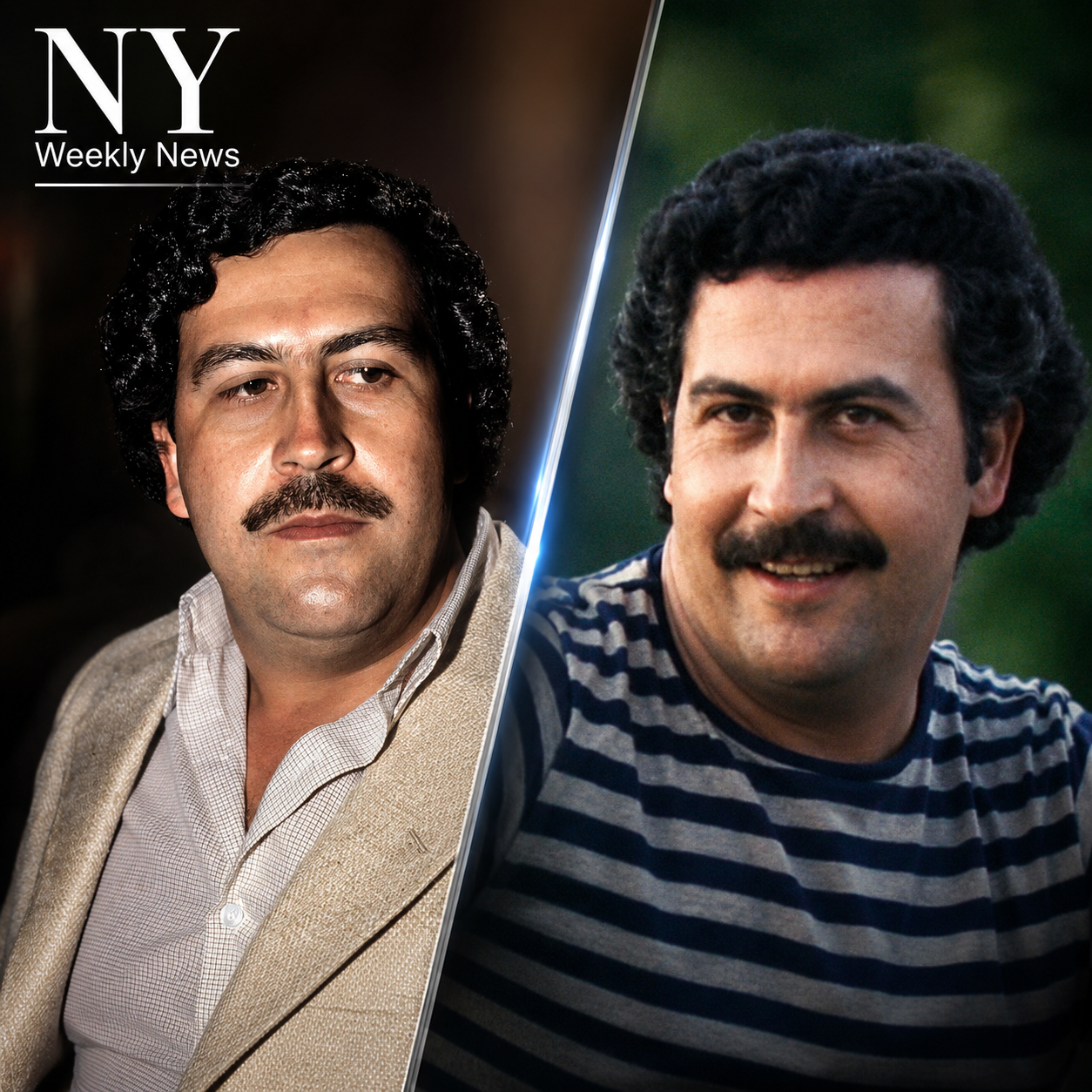
Pablo Escobar is one of the most notorious figures in modern history. He was a Colombian drug lord who built a criminal empire that controlled the global cocaine trade. At the height of his power, he was one of the wealthiest people in the world. His story is one of ambition, violence, and corruption.
Escobar rose from humble beginnings to become the leader of the Medellín Cartel. He was responsible for supplying over 80 percent of the cocaine consumed in the United States [8†L8-L9]. His wealth was staggering, estimated at up to $30 billion. Yet his reign was marked by extreme violence, including the murders of thousands of people.
Today, people search for Pablo Escobar because his life continues to fascinate. His story has been told in books, documentaries, and popular TV series like Narcos. He remains a controversial figure, viewed by some as a ruthless criminal and by others as a folk hero who helped the poor. This biography explores the facts of his life, from his early years to his dramatic death.
| Attribute | Details |
|---|---|
| Full Name | Pablo Emilio Escobar Gaviria |
| Known For | Leader of the Medellín Cartel; “King of Cocaine” |
| Profession | Drug lord, narcoterrorist, politician |
| Nationality | Colombian |
| Birthplace | Rionegro, Antioquia, Colombia |
| Date of Birth | December 1, 1949 |
| Age | 44 at time of death (December 2, 1993) |
| Ethnicity | Colombian (Paisa subgroup; Spanish descent) |
| Height | Approximately 5 feet 5 inches to 5 feet 6 inches (1.66 m to 1.68 m) |
| Marital Status | Married to Maria Victoria Henao (1976 until his death) |
| Children | 2: Juan Pablo Escobar (later Sebastián Marroquín) and Manuela Escobar |
| Education | Studied briefly at Universidad Autónoma Latinoamericana of Medellín; did not graduate |
| Net Worth | Estimated at $25 billion to $30 billion at his peak |
Pablo Escobar was a Colombian drug lord, narcoterrorist, and politician. He was the founder and sole leader of the Medellín Cartel [10†L7-L8]. He is widely known as the “King of Cocaine” because his cartel dominated the cocaine trade in the 1980s and early 1990s [8†, 9].
Escobar was responsible for smuggling massive amounts of cocaine into the United States. At its peak, his cartel controlled about 80 percent of the global cocaine market [8†L8-L9]. His criminal activities made him one of the wealthiest people in the world.
Beyond drug trafficking, Escobar was also involved in politics. He served as a member of the Colombian Chamber of Representatives from 1982 to 1983 [11†, 13]. He used bribery and violence to influence government officials and eliminate his enemies. His reign of terror included assassinations, bombings, and kidnappings. He is estimated to have been responsible for thousands of deaths.
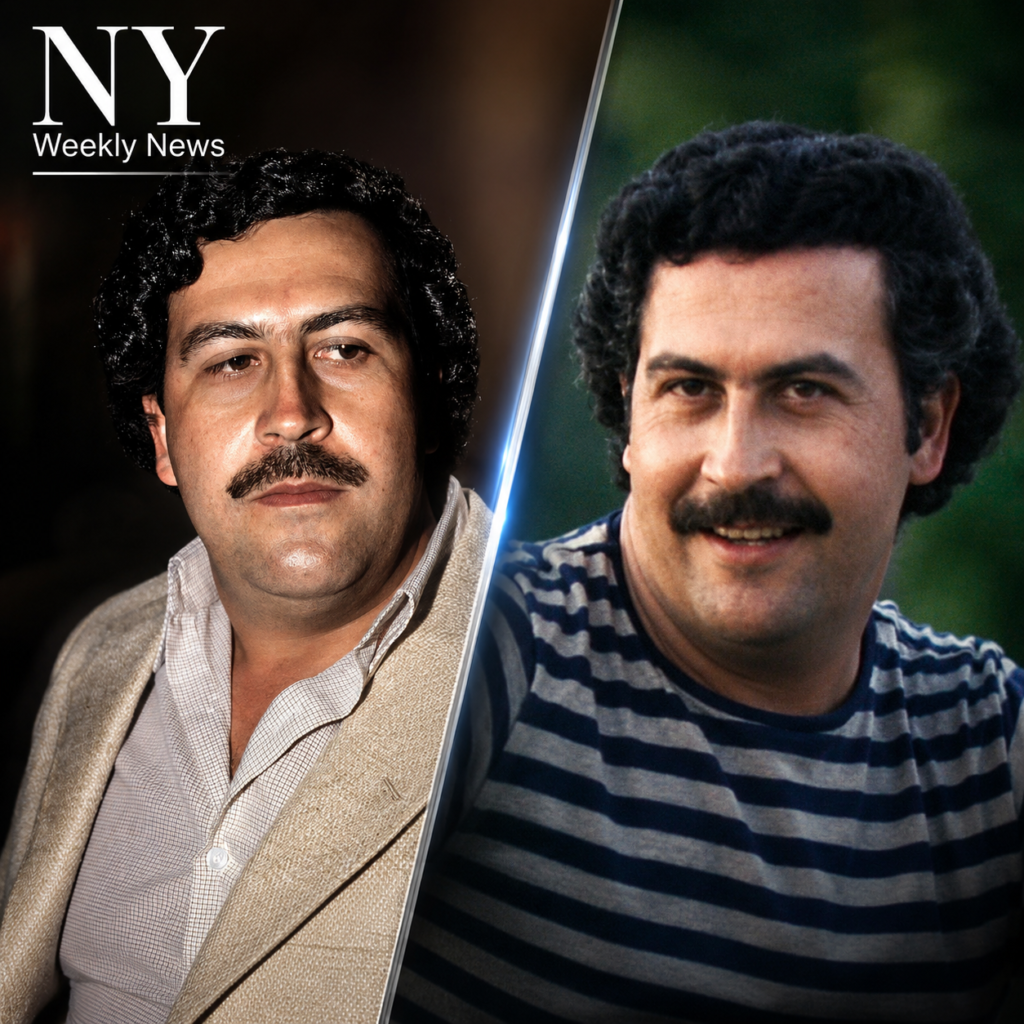
Pablo Emilio Escobar Gaviria was born on December 1, 1949, in the Colombian city of Rionegro, Antioquia [8†L19-L20]. His family later moved to the suburb of Envigado [0†L7]. He was the third of seven children [0†L7]. His family lived in poverty, with his father working as a peasant farmer and his mother as a schoolteacher [8†L21-L22].
From an early age, Escobar showed a unique ambition. He dreamed of raising himself up from his humble beginnings [8†L22-L23]. He reportedly even dreamed of becoming the president of Colombia one day [8†L25]. His early life of crime began when he was young. He stole tombstones and sold phony diplomas to make money [8†L26].
Escobar’s early prominence came during what became known as the “Marlboro Wars.” He played a high-profile role in the control of Colombia’s smuggled cigarette market [8†, L28-L31]. This experience proved to be valuable training for his future as a drug kingpin [8†L31-L32].
Pablo Escobar was born on December 1, 1949. He died on December 2, 1993, at the age of 44 [6†L6]. His death came just one day after his 44th birthday [6†L18]. He was a Sagittarius.
Escobar’s birthday is a significant date in his story. He was killed on December 2, 1993, the day after celebrating his birthday. At the time, he was in hiding, having escaped from prison in July 1992 [6†L18-L19].
Escobar was the son of Abel de Jesús Escobar Echeverri and Hermilda de los Dolores Gaviria Berrío [1†L7-L9]. His father was a peasant farmer [0†L8]. His mother was an elementary school teacher [0†L8]. The family was of Spanish origin, and Escobar belonged to the Paisa ethnic subgroup [0†L45-L46].
Escobar had six siblings. He was the third of seven children [0†L29]. His older brother, Roberto, later wrote about their lives together [3†L24]. His family struggled financially, and they lived in an adobe hut [0†L31-L32].
His mother, Hermilda, lived until 2016 [1†L14]. His parents divorced later in life, but details about their relationship are not widely known.
Escobar studied briefly at the Universidad Autónoma Latinoamericana of Medellín [2†L6]. However, he left without graduating [2†L7]. He reportedly studied political science or economics, depending on the source [2†L27]. Some sources say he was forced to drop out because he could not afford to pay the necessary fees [2†, L27-L28].
His brother Roberto Escobar wrote that before entering the cocaine trade, Escobar ran various businesses [2†L29-L30]. However, his formal education was cut short as he turned to crime.
Escobar’s criminal career began in his teens [9†, L18]. He started with small-time crimes. He sold fake diplomas and stole tombstones to resell [9†L19-L21]. He also stole cars, which led to his first arrest in 1974 [9†L21-L22]. He later became involved in smuggling stereo equipment [9†L20].
In the early 1970s, Escobar began working for various drug smugglers [15†L40]. He also participated in motor vehicle theft and other crimes [2†L8-L9]. He was known for kidnapping and holding people for ransom [15†L41-L42].
In the mid-1970s, Escobar helped found the crime organization that later became known as the Medellín Cartel [9†L32-L33]. In 1975, the drug trafficker Fabio Restrepo was murdered [8†L41-L42]. It was widely believed that Escobar ordered the killing [8†L43]. He immediately seized power and expanded Restrepo’s operation [8†L43-L44].
Under Escobar’s leadership, the cartel began buying large amounts of coca paste in Bolivia and Peru. They processed it into cocaine and transported it to America [8†L45-L46]. Escobar worked with a small group of partners, including the Ochoa brothers, to form the infamous cartel [9†L33-L34].
By the mid-1980s, the Medellín Cartel dominated the cocaine trade. The cartel was earning approximately $420 million a week [12†, 13]. Escobar wielded incredible power and wealth [9†L37-L38]. His drug cartel monopolized the cocaine trade into the United States [10, L15-L18].
Escobar also ventured into politics. He was elected as a member of the Chamber of Representatives of Colombia, serving from July 20, 1982, to October 26, 1983 [11†L24-L25]. He was a member of the Liberal Party [11†L13]. However, his political career was cut short due to his criminal activities.
Facing a manhunt, Escobar surrendered to Colombian authorities in 1991 [8†L13-L14]. He was imprisoned in La Catedral, a luxurious prison he built himself. The facility included a nightclub, sauna, waterfall, and soccer field [14†, L24-L26]. It also had telephones, computers, and fax machines [14†, L26].
However, after Escobar tortured and killed two cartel members at La Catedral, officials decided to move him to a less accommodating prison [14†L27-L28]. Escobar escaped in 1992 [14†L28]. He remained a fugitive until his death [8†L14-L15].
On December 2, 1993, Escobar was killed in a shootout with Colombian authorities in Medellín [6†L13-L14]. He was located through a phone call to his family [6†L15]. After months of evading capture, he was finally found [6†L14-L15]. He was shot and killed by members of Search Bloc, the Colombian Special Forces [6, L13-L14].
His funeral was attended by over 25,000 people [6†L28]. He remains a controversial figure in Colombia [6†L28-L29].
Founded the Medellín Cartel, Escobar was the founder and sole leader of the Medellín Cartel, one of the most powerful criminal organizations in history [10†L7-L8].
Controlled 80 Percent of the Cocaine Trade, At its peak, the cartel controlled about 80 percent of the cocaine shipped to the United States [8†L8-L9].
Becoming one of the wealthiest people in the world, Escobar amassed an estimated net worth of $25 billion to $30 billion [8†L10].
Elected to Political Office – He served as a member of the Colombian Chamber of Representatives from 1982 to 1983 [11†L13].
Named One of the 10 Richest People on Earth, Forbes named him one of the 10 richest people on Earth [8†L10-L11].
In 1976, Escobar married María Victoria Henao [5†L10]. At the time, he was 26 years old, and she was only 15 [5†L11]. She was from a poor family and had grown up in the same neighborhood as Escobar [5†L44].
The couple remained married until Escobar’s death in 1993 [8†L17]. Despite his infidelity, his wife never left him [5†L17-L18]. She later wrote a memoir about her life with him [14†L12].
There is no publicly verified information available about Escobar’s relationships before his marriage.
Pablo Escobar had two children with Maria Victoria Henao [5†L11-L12]:
Juan Pablo Escobar (later Sebastián Marroquín) – Born in 1977 [5†L15-L16]. After his father’s death, he changed his name to Sebastián Marroquín [14†L6-L7]. He became an author and architect [14†L7]. He has spoken publicly about his childhood and has written several books, including Pablo Escobar, My Father (2014) [14†L8].
Manuela Escobar, born in 1984 [5†L16]. Little is known about her life [14†L13]. She has maintained a very private life and has not spoken publicly about her father.
After Escobar’s death, his family fled Colombia. They eventually resettled in Argentina [5†L8]. His son has said that growing up as the child of the world’s most infamous drug lord was “a mix of love and fear and danger” [13†L33].
Pablo Escobar led a life of extreme luxury mixed with constant danger. He was known for his lavish spending and his love of extravagant parties [12, L14-L15]. He owned private planes and luxurious homes [12, 14]. He also had a personal zoo on his estate [9†L43-L44].
Despite his wealth, Escobar was also known for his charitable projects. He sponsored soccer clubs and built housing for the poor [8†L11-L12]. This earned him popularity among some Colombians, who viewed him as a Robin Hood figure [10†L36-L37]. However, his terror campaigns, which resulted in the murder of thousands of people, eventually turned public opinion against him [8†L12-L13].
Escobar was a devoted father. Even when things were dark, he remained close to his children. He called them, sent letters, and recorded tapes for them [13†L46-L47]. He encouraged his son to study and did not want him to follow in his footsteps [13†L35-L37].
Pablo Escobar was approximately 5 feet 5 inches to 5 feet 6 inches tall (1.66 meters to 1.68 meters) [7†L5]. He had brown eyes and black hair [7†L14]. He weighed about 154 pounds (70 kg) [7†L14].
Despite his relatively small stature, Escobar was known for his commanding presence. He was described as charismatic and intense [7†L18-L19]. His physical appearance was often contrasted with the immense power he wielded.
Pablo Escobar’s lifestyle was one of unimaginable luxury. His wealth allowed him to indulge in every possible extravagance [12†L13-L14]. He owned a 7,000-acre estate called Hacienda Nápoles, named after Naples, Italy [9†L39-L40]. The estate reportedly cost $63 million [9†L41].
Hacienda Nápoles featured a soccer field, dinosaur statues, artificial lakes, a bullfighting arena, an airstrip, and a tennis court [9†, L41-L42]. It also had a zoo that housed giraffes, hippopotamuses, and camels [9†L43-L44]. The hippos, in particular, have become a notable part of Escobar’s legacy. They have multiplied and still roam in Colombia [9†L5-L6].
Escobar’s wealth was so vast that he could not spend it all. Significant amounts of money were stored in warehouses and fields [12†, L26-L27]. His brother estimated that about ten percent of his wealth, or $2.1 billion, was lost each year due to rats eating it, the elements destroying it, or it being misplaced [12†L28-L31].
Pablo Escobar was one of the wealthiest individuals in the world during his time [12†L6-L7]. His estimated net worth ranged from $25 billion to $30 billion [4†L7-L8]. Forbes once ranked him as the seventh-richest person globally, estimating his net worth at $9 billion in 1989 [4†L18-L19].
His wealth came primarily from his leadership of the Medellín Cartel [12†L8-L9]. At its peak, the cartel was earning approximately $420 million a week [12†, 13]. This staggering income allowed Escobar to indulge in his lavish lifestyle [12†, L13-L14].
His fortune was so immense that he once offered to pay off Colombia’s national debt of $10 billion in exchange for immunity from extradition [9†L30-L31].
Pablo Escobar died before the advent of social media. He has no official social media presence. However, his legacy lives on through various fan pages, documentaries, and TV series. Many accounts on platforms like Instagram and TikTok post about his life and crimes.
His son, Sebastián Marroquín, is active on social media and uses his platform to speak about his father’s legacy. He often shares his perspective on growing up as Escobar’s son.
He Was Born in a Small Village, Escobar was born in the small village of El Tablazo near Rionegro, Antioquia [0†L45].
He Started as a Car Thief: Escobar began his criminal career by stealing cars [9†L21-L22].
He was arrested in 1974; his first arrest was for car theft [9†L21-L22].
He Built a Luxurious Prison: Escobar built La Catedral, a prison that included a nightclub, sauna, and soccer field [14†L24-L26].
He Offered to Pay Off Colombia’s Debt: Escobar reportedly offered to pay off Colombia’s $10 billion national debt in exchange for immunity from extradition [9†L30-L31].
His Hippos Still Roam Colombia – The hippos from his private zoo have multiplied and still live in Colombia [9†L5-L6].
He was a politician; Escobar served as a member of the Colombian Chamber of Representatives [11†L13].
He Died the Day After His Birthday. Escobar was killed on December 2, 1993, one day after his 44th birthday [6†L18].
Pablo Escobar has been dead since 1993, but his legacy continues to generate interest. His family has moved on with its life. His wife, Maria Victoria Henao, has lived a low-profile life and wrote a memoir [14†L11-L12]. His son, Sebastián Marroquín, has become an author and architect [14†L7]. He has spoken publicly about his father’s crimes and the impact on his life.
In recent years, Escobar’s hippos have become a notable part of his legacy. The animals have multiplied and are now a significant ecological concern in Colombia [9†L5-L6]. There have been discussions about relocating them.
His story continues to be told in popular culture. The Netflix series Narcos dramatized his life and crimes [13†L43]. His son has criticized the show for its inaccuracies.
Pablo Escobar’s public image is complex and contradictory. To some, he is a ruthless criminal who was responsible for thousands of deaths. He used violence, bribery, and terror to achieve his goals. His reign was marked by extreme brutality.
To others, he is a folk hero. He sponsored charity projects and built housing for the poor [8†L11-L12]. He was known as the “Paisa Robin Hood” [10†L36-L37]. This duality has made him a fascinating figure.
His legacy is also one of immense wealth and corruption. He demonstrated the power of the drug trade and its ability to corrupt governments. His story serves as a cautionary tale about the dangers of unchecked ambition and criminality.
People search for Pablo Escobar for many reasons:
His Life Story – Escobar’s rise from poverty to immense wealth is a compelling story.
His Crimes – People are fascinated by the scale of his criminal empire.
His wealth, his net worth, and his lavish lifestyle are topics of interest.
His Family – People are curious about his wife and children and what happened to them.
Popular culture shows like Narcos have renewed interest in his life.
His Legacy: People are interested in the impact he had on Colombia and the world.
The hippos: The story of his escaped hippos has become a quirky part of his legacy.
Misconception: Pablo Escobar was a hero to all Colombians
This is not accurate. While some Colombians view him as a folk hero, many others see him as a ruthless criminal who caused immense suffering. His terror campaigns turned public opinion against him [8†L12-L13].
Misconception: He was the richest person in history
Escobar was one of the wealthiest criminals in history, but he was not the richest person in history. His net worth is estimated at $25 billion to $30 billion.
Misconception: He was a professional politician
Escobar served as a member of the Chamber of Representatives for a brief period, but his political career was overshadowed by his criminal activities.
Misconception: All of his wealth was recovered
Much of Escobar’s wealth was never recovered. Significant amounts were lost due to rats, the elements, and misplacement [12†L28-L31].
Misconception: He died in a prison
Escobar died in a shootout while on the run. He had escaped from prison in 1992 [14†L28].
Pablo Escobar was a public figure, and many details of his life are well-documented. However, some aspects of his life remain private. His children have maintained varying levels of privacy. Manuela Escobar, in particular, has stayed out of the public eye [14†, 13].
His wife, Maria Victoria Henao, has also maintained a low profile. She wrote a memoir but has not sought public attention. The family’s life after Escobar’s death has been largely private.
Pablo Escobar’s life is one of the most extraordinary and tragic stories of the 20th century. He rose from poverty to become one of the wealthiest and most powerful criminals in history. His ambition, ruthlessness, and intelligence allowed him to build a drug empire that dominated the global cocaine trade.
However, his reign was marked by extreme violence and corruption. He was responsible for the deaths of thousands of people. His actions destabilized Colombia and had a profound impact on the United States.
Escobar’s legacy is complex. He is remembered as both a criminal and a folk hero. His story continues to fascinate people around the world. It serves as a reminder of the destructive power of the drug trade and the dangers of unchecked ambition.
Pablo Escobar died on December 2, 1993. He was 44 years old. His death marked the end of an era, but his legacy lives on.
Pablo Escobar was a Colombian drug lord who was the founder and leader of the Medellín Cartel. He was known as the “King of Cocaine” and was one of the wealthiest criminals in history. He was responsible for supplying over 80 percent of the cocaine consumed in the United States.
Pablo Escobar was killed on December 2, 1993, in a shootout with Colombian authorities in Medellín. He was shot and killed by members of Search Bloc, the Colombian Special Forces. His death came one day after his 44th birthday.
Pablo Escobar’s net worth was estimated at $25 billion to $30 billion at his peak. Forbes once ranked him as the seventh-richest person globally. His cartel was earning approximately $420 million a week at its peak.
Pablo Escobar was married to Maria Victoria Henao. They married in 1976 when she was 15 years old and he was 26. She remained married to him until his death in 1993. She later wrote a memoir about her life with him.
Pablo Escobar had two children: a son named Juan Pablo Escobar (later Sebastián Marroquín) and a daughter named Manuela Escobar. His son has become an author and architect, while his daughter has maintained a very private life.
The Medellín Cartel was a powerful drug cartel founded by Pablo Escobar in the mid-1970s. It dominated the global cocaine trade in the 1980s and early 1990s. At its peak, it controlled about 80 percent of the cocaine shipped to the United States.
Yes, Pablo Escobar served as a member of the Colombian Chamber of Representatives from 1982 to 1983. He was a member of the Liberal Party. However, his political career was overshadowed by his criminal activities.
After Escobar’s death in 1993, his family fled Colombia and eventually resettled in Argentina. His son changed his name to Sebastián Marroquín and became an author. His wife and daughter have maintained low profiles.
Pablo Escobar had a private zoo on his estate, Hacienda Nápoles. It included hippopotamuses. After his death, the hippos escaped and multiplied. They still roam in Colombia and have become an ecological concern.
Pablo Escobar is a controversial figure in Colombia. Some view him as a folk hero because he sponsored charity projects and built housing for the poor. However, many others see him as a ruthless criminal responsible for thousands of deaths.
Read More: Klay Thompson Net Worth 2026: Salary & Career Earnings